Insights7 min read
10 Questions to Ask a Referral Partner in Your First Meeting
A first meeting feels like a friendly chat, so the hard questions get skipped. These ten cover licensing, fees, payment triggers, disclosure and data.

Published 21 November 2026
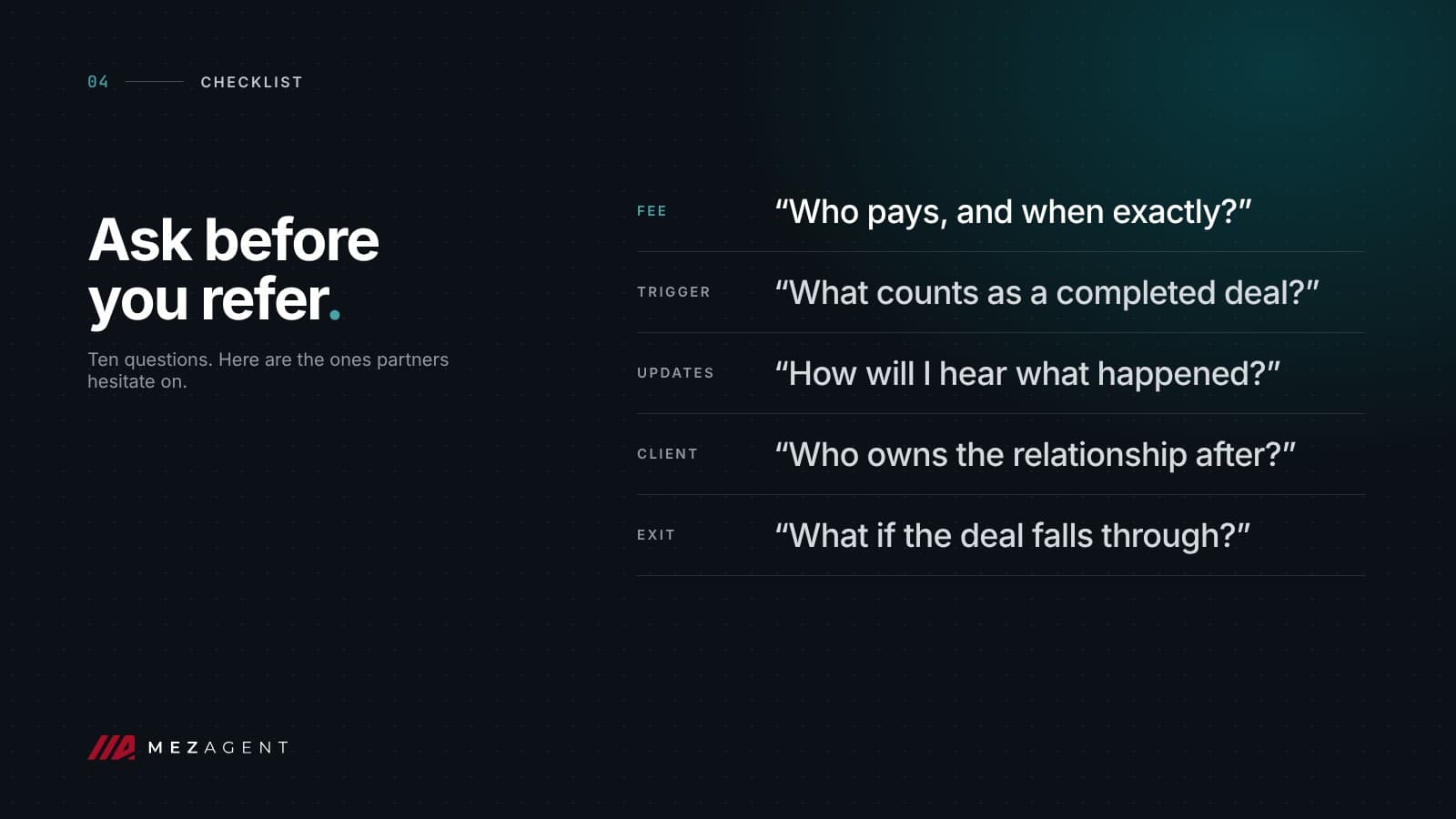
A first meeting with a potential referral partner often feels like a friendly chat. Both sides want the partnership to work, so the hard questions get skipped. The trouble usually starts later: a fee that never arrives, a client who was handled badly, or a deal you only hear about after it has closed.
These ten questions help you avoid that. Before you introduce a client, ask a referral partner how they are licensed, how and when they pay referral fees, what happens if the deal changes and how they will keep you updated. Get the answers in writing before you share any client details. That protects you, your client and the relationship.
They work for any partner you might send clients to, whether it is a property developer, a law firm, an immigration consultancy or a wealth manager.
Key Takeaways
- The first meeting is the point of maximum leverage: before you share a client's name, the business wants something from you, and after you share it the balance shifts.
- Licensing, who actually handles the client, the fee type, the payment trigger and the payment method are the five answers that matter most before any introduction.
- A vague fee trigger such as when the deal completes, or no written agreement at all, is a red flag whether or not everything else in the meeting felt good.
- One red flag is not always a reason to walk away. Several together usually are.
Why Does the First Meeting Matter So Much?
Your client trusts you. When you recommend a business, you lend it some of that trust. If the business lets the client down, your reputation takes the hit, not theirs.
The first meeting is also the point where you have the most leverage. Before you share a client's name, the business wants something from you. After you share it, the balance shifts. That is why terms, fees and expectations should be settled first.
1. Are You Licensed or Registered for This Work, and Where Can I Check?
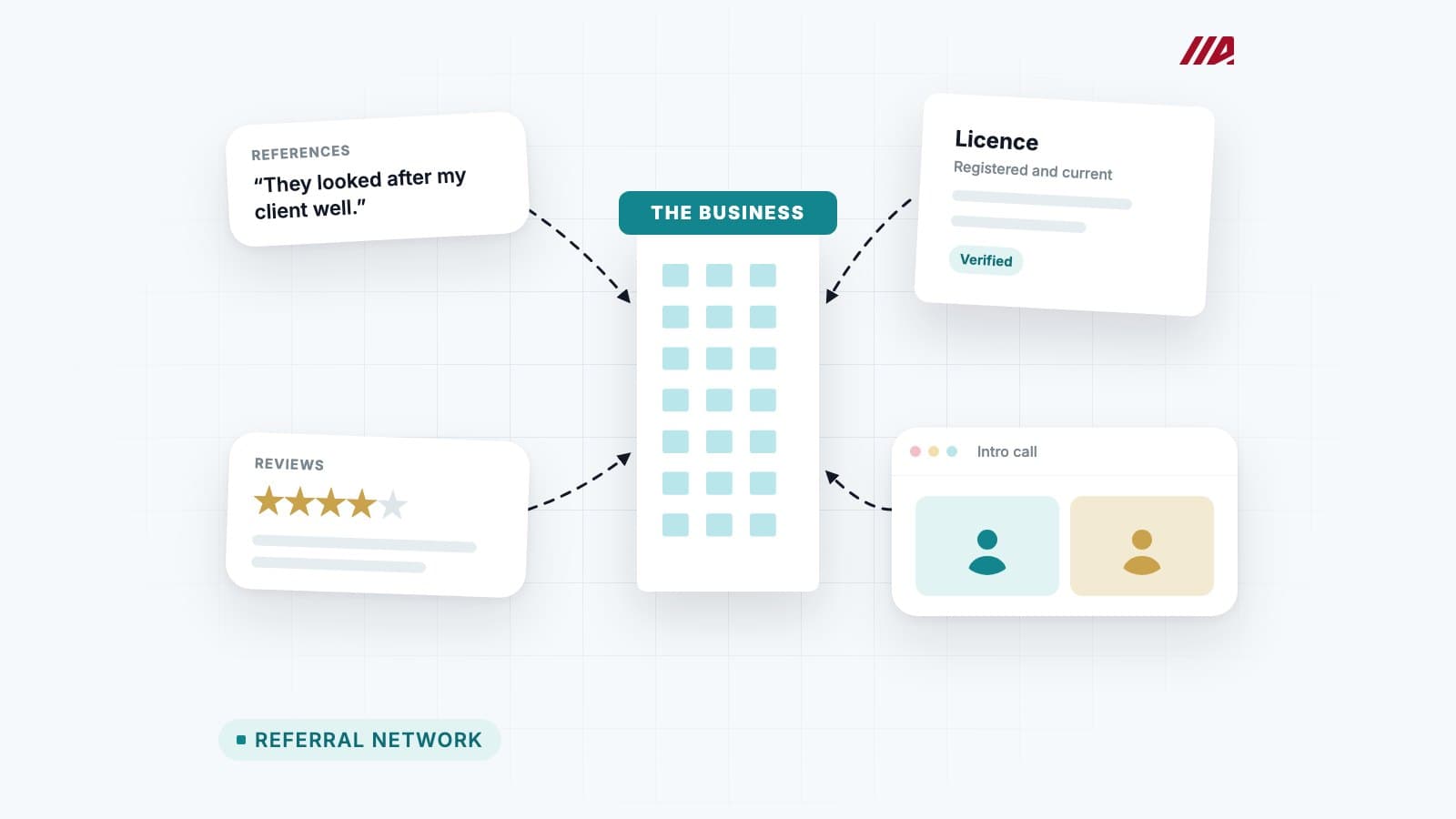
Ask which regulator or professional body the business answers to, and check the public register yourself. In the UK, for example, you can search the FCA register for financial firms and the SRA's register for solicitors. Other countries have their own registers for lawyers, estate agents and immigration advisers.
2. Who Will Actually Handle My Client?
A senior partner may lead the meeting with you, while a junior team member handles your client. Ask who the day-to-day contact will be, how experienced they are with this type of client, and what happens if that person leaves.
3. Is the Fee Fixed or a Percentage?
A referral fee is usually a fixed amount. A commission is a percentage of the deal or service value. Ask which one applies and, for a percentage, a percentage of what. Our guide to referral fees vs commissions explains the difference.
4. When Exactly Is the Fee Due?
This is the question most introducers forget. A fee should be due once clear deal criteria are met, not at some vague point when the deal is done. For property, that is often when an agreed share of the price, such as 50%, has been transferred. On MezAgent, businesses normally pay within two weeks of that point.
5. How Will You Pay Me?
Ask about the payment method, the currency, whether they need an invoice from you and whether any tax will be withheld. Cross-border payments can lose value through exchange rates and bank charges, so agree who covers those costs.
6. What Happens If the Deal Is Delayed, Changed or Cancelled?
Deals rarely go exactly to plan. A visa application may be refused, a client may switch to a cheaper property or pause for a year. Ask how each of these affects your fee, and for how long the agreement covers your client if they come back later.
7. How Will You Keep Me Updated?
You should not have to chase a business to find out whether your client signed. Ask how often you will hear about progress, through which channel, and what you will be told at each stage.
8. Will My Client Be Told About the Fee?
In some sectors, disclosing a referral fee to the client is a rule. In others it is simply good practice. Ask how the business handles disclosure, and agree the wording so your client is never surprised.
9. How Do You Protect My Client's Data?
You will be sharing personal and often sensitive information. Ask how the business stores it, who can see it and whether they comply with data protection rules such as GDPR. Ask before you send anything.
10. Can I Speak to Other Introducers Who Work With You?
A business that pays fairly and on time will usually be happy to connect you with other introducers. If they refuse, or cannot name anyone, treat that as information.
What Are the Red Flags in a Referral Partner?
Watch for these during or after the first meeting:
| Red flag | Why it matters |
|---|---|
| No written agreement, or we'll sort the paperwork later | Verbal terms are hard to prove if there is a dispute |
| Vague fee trigger, such as when it all completes | Leaves room to delay or avoid payment |
| Asks for full client details before agreeing terms | Your leverage disappears once the details are shared |
| Cannot point to a licence or register entry | You may be exposing your client to an unregulated provider |
| Avoids talking about disclosure | May create problems with your client or your own regulator |
| No other introducers to speak to | No track record of paying people like you |
What Should the Written Agreement Cover?
One red flag is not always a reason to walk away. Several together usually are. Once you are happy with the answers, put them in writing. A good referral agreement covers:
the parties and the introducer's role
the fee type, amount or percentage
the trigger for payment and the payment period
what happens if the deal is refused, delayed or cancelled
how long your client is covered (often called non-circumvention)
confidentiality, data protection and disclosure to the client
governing law
Our post on what a finder's fee agreement in investment migration should include goes through these clauses one by one. If your deal is in Greece, see what a written referral agreement should include in Greece. For the risks of skipping this step, read informal referrals vs a tracked platform.
How Does MezAgent Help With the First Meeting?
MezAgent does not replace your own questions, but it takes care of several of them by design:
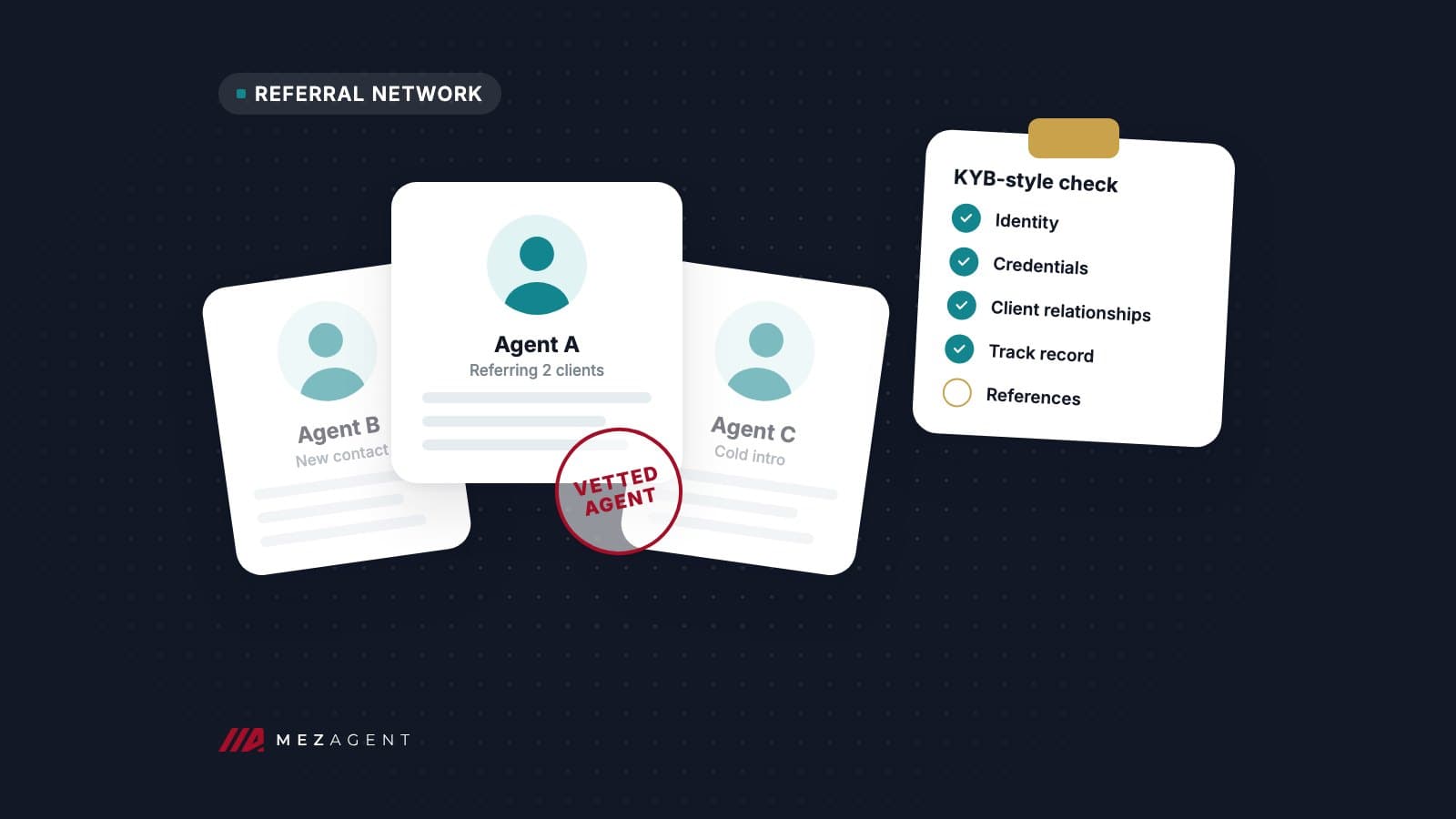
Businesses on MezAgent are checked for reputation before they can post offers.
Each offer shows the fee type, amount or percentage and the deal criteria up front.
Terms are agreed in a digital referral agreement before your client's details are shared.
You and the business both track the deal, so updates do not depend on phone calls.
MezAgent takes 0% platform commission. Your fee is yours.
You can see how this works for introducers on our page for professionals.
Frequently Asked Questions
Should a referral agreement be in writing?
Yes. A verbal agreement can be valid in many countries, but it is hard to prove what was agreed if there is a dispute. A written or digital agreement sets out the fee, the trigger and the payment period before you share your client's details.
What is a red flag in a referral partner?
Common red flags are no written agreement, a vague trigger for the fee, pressure to share client details before terms are agreed, and no licence or register entry you can check. Several red flags together are a strong reason to walk away.
When should I share my client's details?
Only after you have agreed the terms in writing, including the fee, when it is due and how your client's data will be protected. Once the details are shared, it becomes much harder to negotiate.
The Bottom Line
Ten questions, asked in one sitting, turn a friendly introduction into an actual screening. Licensing, who handles the client, the fee type, the payment trigger, the payment method, the disclosure and the data all need answers before a client's name leaves your desk.
None of the questions takes long to ask. All of them are easy to skip when the conversation is going well socially, which is exactly when skipping them costs the most.
This article is for general informational purposes only and is not legal, tax, or immigration advice. Rules vary by jurisdiction and change frequently. Consult a licensed professional before making decisions based on this content.
Free forever for professionals. No card required.
Sign up